A Wine Label, Read from Place to Producer
A wine label can tell you how a bottle is named, presented and connected to a place or producer. Read its details in context, and you can ask sharper questions without treating the wording as a tasting note.
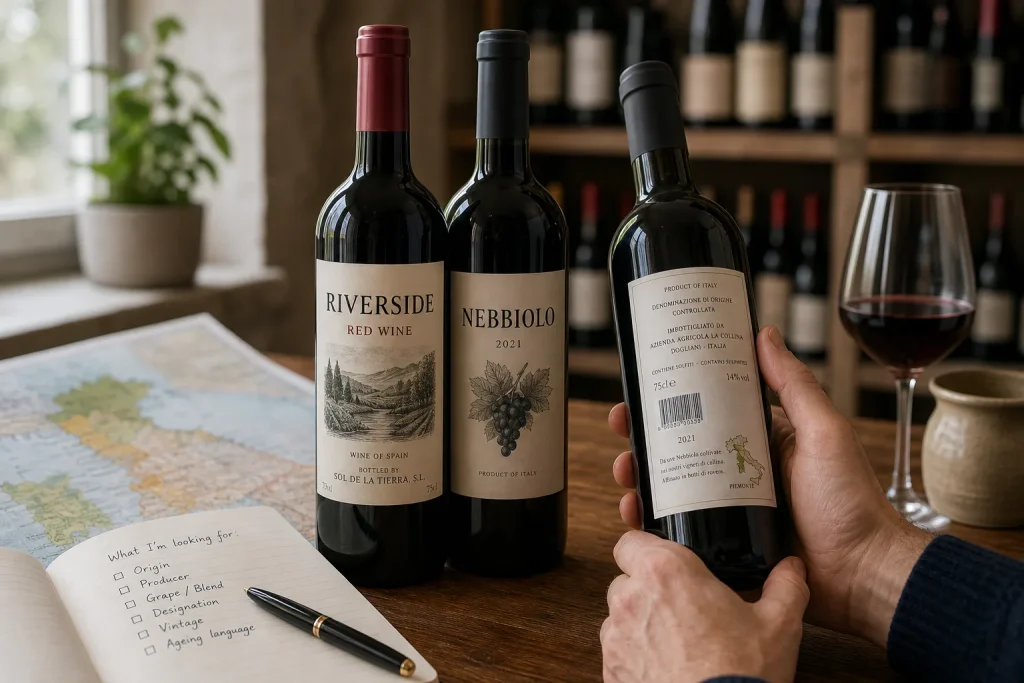
At a shop shelf, one bottle leads with a village name; the bottle beside it gives a grape in large type. Turn either around and the small print may identify a producer, bottler, importer or formal designation. Rather than trying to decode every phrase at once, start by asking what the label is naming: a place, a business, a grape or a category.
Is the prominent name a place or a brand?
A geographical name can refer to a country, region, village or vineyard, while a brand or cuvée name identifies the wine as it is sold. The label’s layout does not always make the distinction obvious. Look for an origin statement on the back and compare it with the largest wording on the front.
A place name tells you how the wine is presented in relation to its origin. What the name means legally depends on the specific designation and the rules that apply to it. Treat the map as a starting point for questions about the wine, not as a description of its flavour.
Say a front label says “Riverside” in large type, while the back says “wine of Spain” and names a bottling company. You can identify the declared country and the bottler, but the word “Riverside” alone does not establish that it is an official region or identify who grew the grapes. The next useful move is to look for a named producer or ask the merchant what the label’s wording means.
Who is named as the producer?
A label may name a grower, winery, bottler, importer or distributor, and one business can have more than one role. Read the words beside each name: “produced by” and “bottled by” are not interchangeable descriptions. Their precise meaning can depend on the rules for the wine’s origin and the market where it is sold.
A prominent brand may belong to a business that makes wine, sells wine made elsewhere, or does both. The front label alone may not settle which is true. If the connection between vineyard and cellar matters to you, look for the exact producer wording and seek an explanation from the producer or a knowledgeable wine merchant.
Terms such as “estate bottled” also need to be read in context. Their significance depends on the applicable local definition, so avoid treating “estate” as a universal description of how every grape was grown or every part of the wine was made.
Does the label name a grape or a region?
Chardonnay and Syrah are grape names; Chablis and Barolo are place names. A label may foreground one, both or neither. If you want to know the grape behind a place name, check the back label or consult a reliable regional reference.
A region may have rules or customary associations concerning grapes, but these vary. A variety name on a label may also allow other grapes under the rules that apply. If exact composition matters for your choice, look for producer information or ask a wine merchant rather than assuming the front label gives the full blend.
Imagine you are choosing between two bottles for a supper of lentils and roast vegetables. One says Barolo; the other says Nebbiolo. The first foregrounds a place, the second a grape. You still need to check the origin and producer details, then ask a merchant about the styles if you want help deciding which better suits the meal. Neither name, by itself, settles that question.
What do formal designations actually name?
Terms such as AOC, DOC and DO belong to different wine-law systems. Their definitions and requirements are specific to the relevant jurisdiction and designation; the initials should not be treated as directly equivalent across countries.
A formal designation may set conditions for matters such as geographical boundaries, permitted grapes or production practices. Which conditions apply is a question for that particular rulebook. If the detail matters, consult the relevant appellation body or an authoritative regional source rather than relying on a general glossary.
Other wording, including certification claims, also depends on the scheme and market named. Read the certification mark and its accompanying explanation together. It describes a defined set of requirements, not a complete account of every environmental or sensory quality you might care about.
How should you read vintage and ageing language?
A vintage identifies a harvest year under the applicable labelling rules. It can distinguish one release from another, but the year alone does not tell you how the wine will taste or whether it suits your plans.
Ageing terms such as Reserva, Riserva and Gran Reserva have specific meanings in some places, while similar wording may be used differently elsewhere. Check the origin and the definition before drawing conclusions about time in barrel or bottle. Even a clearly defined term is not a tasting note.
“Old vines” and “reserve” can also carry different meanings according to local rules and use. If a particular claim shapes your choice, ask the producer or merchant what it means for that bottle. A familiar word is not necessarily a shared standard.
Which label details answer your question?
Choose the detail that matters to you first, then check the wording that supports it. Each item below pairs an observation with a decision and an alternative if the label leaves something unresolved.
- Origin: Check for a country, region or appellation. If it names the place you want, keep it in consideration; if it is unclear or absent, check the back label or choose a bottle with a clearer origin statement.
- Producer: Check the wording beside the business names. If it identifies the producer, use that name when comparing bottles; if it names only a bottler or importer, ask the merchant or choose a label that names the maker.
- Grape or blend: Look for a variety name or an explicit blend. If it answers your question, compare it with your preference; if only a region is named, consult a regional reference or select a bottle that names its grape.
- Designation: Check which scheme and place the formal term belongs to. If both are clear, consult that designation’s definition when the rules matter; if either is unclear, do not compare the initials with another country’s category as though they meant the same thing.
- Vintage: Look for a harvest year. If you need to distinguish releases, record the year; if there is no year or its significance is unclear, ask the merchant or compare the producer’s other label details instead.
- Ageing language: Check the exact term and the wine’s origin. If a local definition is available, use that meaning; if not, treat the wording as insufficient to establish a particular ageing regime.
- Practical information: Check the alcohol statement, allergen wording and importer details when relevant to your decision. If a detail you need is missing or ambiguous, ask the seller or choose a bottle with clearer information.
Picture a fictional bottle whose front says “Hill Estate Red”, whose back names a region and bottling company, but does not identify a grape. You want to bring a red wine to a lentil supper and prefer a grape you recognise. First, note that “Hill Estate Red” may be a brand or wine name, not a clear producer identification. Next, use the back label to record the stated region and bottler; do not infer the grape from either. Then ask the merchant whether the producer or blend is available in other information. If the answer names a grape you like, compare that information with your preference; if it cannot be confirmed, choose a bottle that names its grape instead. The trade-off is clear: the fictional bottle offers an origin clue, while the alternative offers a more direct answer to the question you started with.
Think of the label as a set of separate drawers: one for origin, another for the business names, another for grape and another for formal claims. Open the drawer that answers your question, and leave unresolved details unresolved. That distinction makes a useful conversation with a merchant more precise, even when the label itself cannot settle your choice.
Along the same table
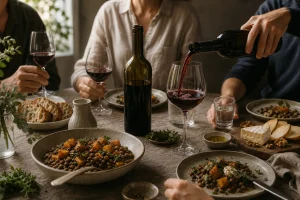
A Shared Bottle, Several Ways to Serve It
At one imagined supper, a host keeps wine service flexible: guests can choose when to pour,…
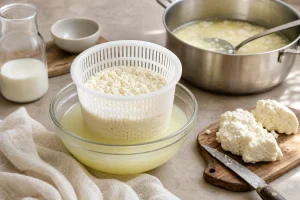
From Curd to Texture: The Choices Behind a Cheese
A cheese’s moisture and texture begin to take shape before the curds reach the mould. Learn…