A Shared Bottle, Several Ways to Serve It
At one imagined supper, a host keeps wine service flexible: guests can choose when to pour, what to drink with the food and when to stop.
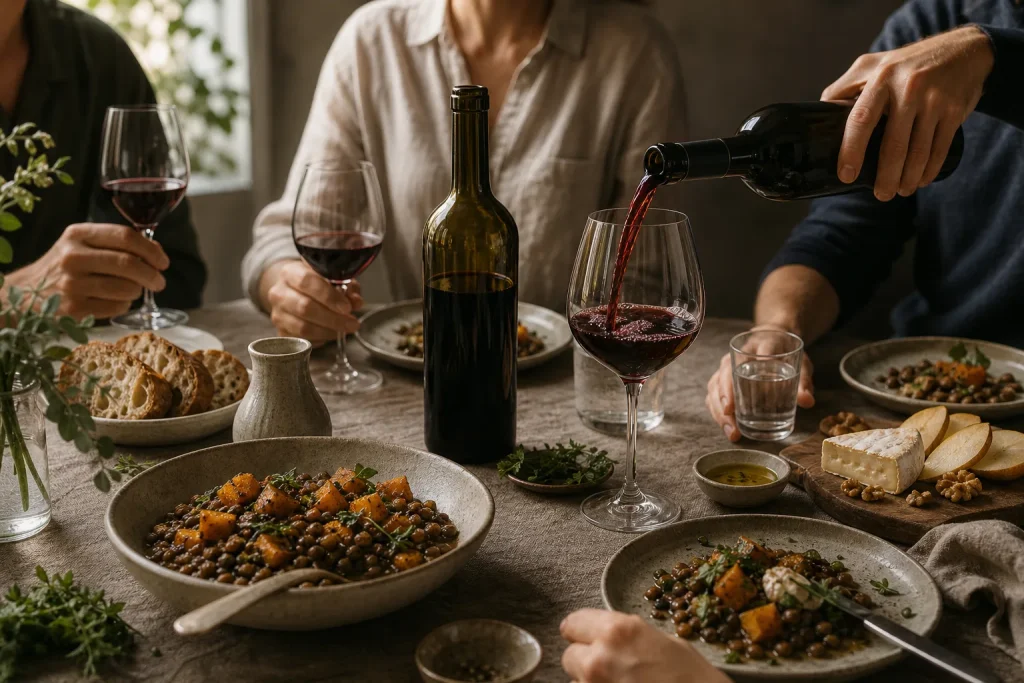
The lentils are warm in the pot when the first guest arrives. Bread lands on the table, water is poured, and a bottle of red waits beside the plates. The host has a simple choice: make wine part of the evening without making it the evening’s timetable.
How should the bottle meet the meal?
Imagine a young, medium-bodied red with lentils, roast squash, herbs and a sharp dressing. The host has kept the bottle away from the hob and other sources of heat. Rather than assuming it is ready at its best, they pour a small amount and see how it sits alongside a bite of food.
A wine served quite cool may seem less expressive to some drinkers, while one that has warmed in a hot kitchen may feel less refreshing. These are possibilities, not rules: the wine, the food and each person’s preference all matter. If the first sip feels muted, the host can leave the glass in hand for a while; if it feels too warm, they can set the bottle somewhere cooler. There is no need to turn either adjustment into a verdict.
The host asks whether anyone would like a small pour while dinner is being finished. One guest says yes; another chooses water. The bottle is available, but nobody is expected to drink from it.
What makes a first pour comfortable?
The host pours a little, then waits for guests to decide whether they want more once the food is served. An empty glass is not an automatic invitation to refill it. Some people drink slowly, and others may prefer to pause or stop.
Attentive service can be quiet. The host keeps the bottle within reach and asks before topping up, rather than circling the table with an automatic pour. If someone declines, a nod is enough; they do not owe the table an explanation.
Once the lentils arrive, the host offers another pour to anyone who wants one. A sip taken with food may feel different from one taken while waiting, but guests can make that comparison for themselves. The meal sets the pace.
Which glasses are comfortable to use?
The cupboard holds broad bowls, narrower wine glasses and plain tumblers. The host chooses clean, stable glasses that feel comfortable to hold, without treating a mismatched set as a problem. A broad bowl gives space to turn the wine gently; some drinkers prefer a narrower glass. Neither shape needs to dictate how anyone tastes.
For this supper, everyone gets a simple glass. One guest leaves the wine still; another gives it a gentle turn. Both can take the approach that feels natural, and the conversation continues without instruction.
If the group is curious, the host might say, “Try a sip before the squash, then one after.” That offers an easy way to notice how food and wine meet, without asking anyone to agree on a single answer.
When is it useful to open the bottle?
The host opens the bottle as dinner begins and pours a little for those who want it. Decanting is not automatic. If the wine seems quiet, they leave it in the glass for a moment; if it is pleasant as served, there is no need to change anything.
Say one guest finds the wine firm and drying beside the lentils. The host offers a bite of squash and a sip of water instead of arguing about the description. The guest tries the combination and decides whether to return to the wine or leave it aside. Either choice is a useful answer for that person, not a ruling on the bottle.
That small response matters more than a rehearsed explanation. The host need not solve a puzzle for the group; they can make the wine available, then pay attention to what guests are actually enjoying.
How can the table change course?
Later, someone brings out mild, creamy cheese with pears. The host offers the red wine to anyone who wants to try it with the cheese, but does not assume it must suit the new course. One guest keeps sipping; another pours water and moves to tea. Both choices belong at the table.
The bottle might be opened before the food for a group that wants to linger over a first glass, or when plates are ready for those who prefer to drink with dinner. Here, the host waits until the meal is nearly ready because that suits these guests. A shared bottle is a little like a serving bowl passed around the table: useful to offer, easy to leave, and not something everyone must take from.
When the last pear is shared, the bottle is simply one option among several. The host has kept it away from heat, asked before refilling, and left room for water and tea. Keeping those choices visible is a practical courtesy; it lets each guest decide whether another sip belongs in the evening.
Along the same table
From Curd to Texture: The Choices Behind a Cheese
A cheese’s moisture and texture begin to take shape before the curds reach the mould. Learn…
At the Market, Let the Basket Sketch the Region
A market basket can reveal how a place eats through seasonal produce, everyday staples and the…